
If you read mainstream lifestyle articles about sustainable fashion, they will tell you that finding great pieces at a secondhand store requires a massive sacrifice of time. They envision an all-day treasure hunt: you pack a water bottle, put on your most comfortable sneakers, and spend four grueling hours systematically sliding every single plastic hanger down fifty different overcrowded racks, emerging exhausted with sore fingers and a layer of dust on your hands.
When you work a structured, that kind of time simply does not exist. Your weekends are precious, and your lunch breaks are exactly sixty minutes long. For a long time, I assumed that because I didn't have hours to dedicate to the thrift racks, I was stuck relying on quick, convenient fast-fashion websites to refresh my wardrobe.
But running Shelf & Seam on a tight schedule forced me to treat secondhand shopping like a data-driven science rather than a chaotic treasure hunt. I realized that thrift stores have a highly predictable organizational geometry. Certain sections are consistently filled with hidden, high-quality gems made of premium natural fibers, while other sections are completely clogged with discarded, stretched-out fast-fashion garbage.
By mapping out a high-efficiency shopping route, you can walk into any local Goodwill, skip 80% of the visual clutter, target the absolute highest-value zones, and walk out with a gorgeous investment piece in under twenty minutes. Here is the exact priority path I follow when time is of the essence.
The Efficiency Route: Where to Walk First
To thrift successfully on a deadline, you must abandon the women’s tops and trendy contemporary dress sections immediately. These areas are the absolute epicenter of fast-fashion dumping grounds; they are packed with thousands of polyester shirts from cheap mall brands that will warp after one laundry cycle. Instead, direct your footsteps straight toward these three high-yield zones:
           [The 20-Minute High-Yield Thrift Route]
                              |
         |--------------------|--------------------|
         |                    |                    |
   [Stop 1: Men's Knitwear]   [Stop 2: Outerwear]  [Stop 3: Leather & Belts]
   Premium wool, cotton,      Heavy structural     Genuine skins, solid brass,
   and oversized cachemeres.  blazers and coats.   instant wardrobe elevation.
By prioritizing sections based on structural material durability rather than gender or trend marketing, you completely bypass the low-quality synthetic noise.
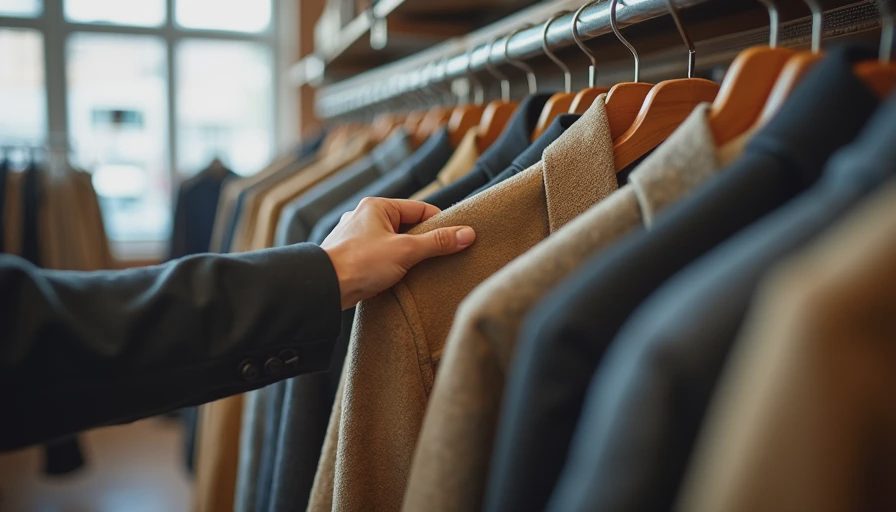
The Big Three High-Yield Sections
Here is why these specific zones deserve 100% of your limited time, along with what to look for during a rapid-fire garment quality check:
1. The Men's Knitwear & Sweater Rack (Time Investment: 7 Minutes)
Why it’s a goldmine: Menswear is historically engineered for functional durability rather than fleeting aesthetic trends. While the women's sweater section is usually a sea of pilling acrylic and thin synthetic blends, the men’s sweater rack is consistently stocked with heavy, structured, 100% natural fibers.
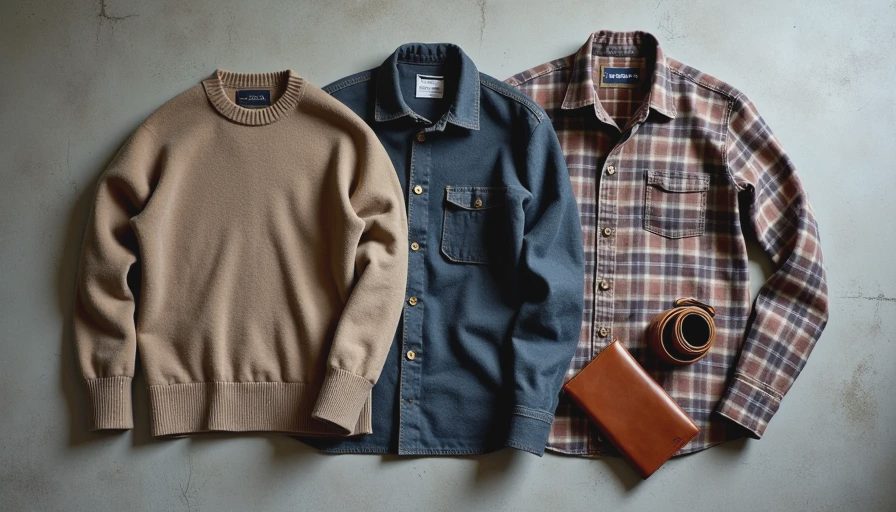
The Quick-Scan Strategy: Do not look at the size tags. Instead, run your hand quickly along the bottom hems of the sweaters. Look for a dense, heavy weight and a matte texture. You are hunting for 100% merino wool, lambswool, heavy cable-knit cotton, or premium vintage cashmere. An oversized men’s medium wool crewneck looks incredibly chic when French-tucked into a pair of high-rise denim jeans or structured trousers for a day at the office workspace.
2. The Unisex Outerwear & Blazer Section (Time Investment: 8 Minutes)
Why it’s a goldmine: As we discussed in our blazer tailoring blueprint, structured outerwear is the ultimate wardrobe elevator. Vintage blazers from the 80s and 90s feature impeccable internal tailoring canvas structures that you simply cannot buy in modern retail stores for under two hundred dollars.
The Quick-Scan Strategy: Walk down the aisle looking strictly at the shoulder shapes and patterns. Pull out anything featuring classic prints like houndstooth, herringbone, or subtle plaid. Execute a rapid two-second pinch test of the front lapel fabric to ensure it isn't a glued, bubbling synthetic fused interfacing. If the shoulders align reasonably well with your natural bone structure, it is an instant candidate for a quick home sewing tweak.
3. The Accessories Wall: Leather Belts & Bags (Time Investment: 5 Minutes)
Why it’s a goldmine: A high-quality belt is a secret weapon for capsule wardrobe remixing—it cinches an oversized cardigan, anchors a pair of pleated trousers, and pulls a monochrome column outfit together instantly. Modern retail belts are almost entirely cheap polyurethane "vegan leather" that splits and cracks within six months. Vintage belts are almost always thick, solid, single-strip genuine animal hides.
The Quick-Scan Strategy: Flip through the hanging belt rack looking for thick, heavy leather straps and heavy metal hardware. Look at the back of the strap for the stamped words "Genuine Leather" or "Full Grain." Don't worry if the brass buckle looks slightly tarnished; a quick two-minute rub with a scrap fabric cloth will bring back a gorgeous, warm vintage patina that adds effortless character to your everyday uniform.
The Thrift Store Sorting Matrix
To help you manage your mental energy when you are rushing through a local shop on a tight schedule, use this quick reference matrix to categorize which aisles to conquer and which ones to completely ignore:
High-Efficiency Section Allocation Guide
Priority Tier | Goodwill Aisle / Section | Expected Fabric Quality | Time-Saver Assessment |
Tier 1: High Priority | Men's Sweaters & Cardigans | Extremely High (Wool, Cashmere, Heavy Cotton) | Excellent. High density of durable natural fibers that resist trends and hold their shape for years. |
Tier 1: High Priority | Suits, Blazers, and Heavy Coats | High (Tweed, Structured Linens, Virgin Wool) | Excellent. Look for vintage tailoring skeletons that can be easily hemmed or taken in at home. |
Tier 2: Medium Priority | Men's Button-Down Shirts | Medium to High (Oxford Cotton, Pure Linens) | Good. Look for classic white or blue striped shirts to style as relaxed, oversized layering bases. |
Tier 3: Skip Entirely | Women's Trendy Tops & Blouses | Extremely Low (Polyester, Rayon, Sheer Blends) | Terrible. A massive waste of time. Mostly fast-fashion items that look worn-out and cheap. |
Tier 3: Skip Entirely | Contemporary Knit Dresses | Low (Acrylic, Thin Ribbed Synthetics) | Terrible. Usually stretched completely out of shape from improper hanger storage on the retail floor. |
Developing a Precision Mindset
Thrifting successfully on a budget isn't about luck, and it certainly isn't about having infinite free hours to waste. It is about developing an analytical, precision mindset. When you know exactly what materials you are looking for and exactly where they are stored, secondhand shopping transforms from a stressful chore into a highly rewarding, high-efficiency habit.
You can honor your ethics, respect your hard-earned receptionist savings account, and build a beautiful, high-quality capsule wardrobe without ever sacrificing your precious weekend resting hours.
The next time you find yourself with an unexpected fifteen minutes to spare, don't waste it scrolling through a fast-fashion app on your phone. Park your car, walk straight into a local secondhand shop with a plan, head directly to the high-yield racks, and let the architecture of a great wardrobe find you.




No comments yet — grab the first one.