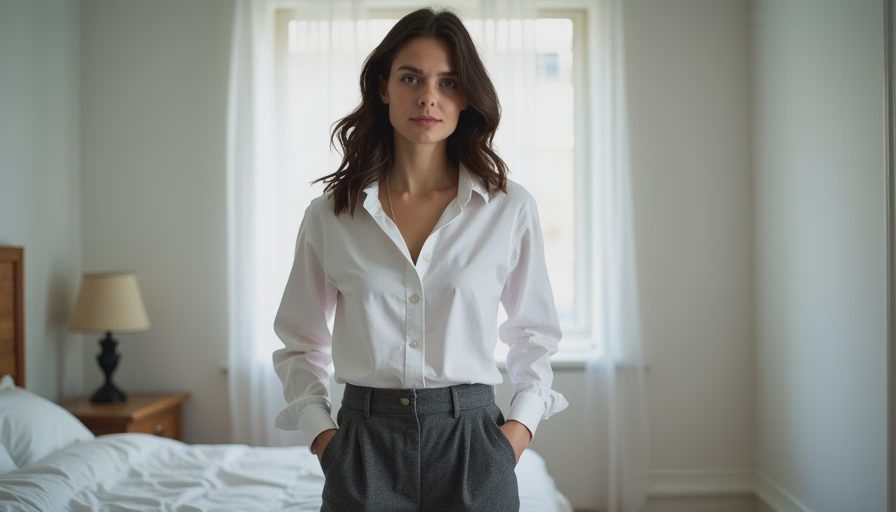
There is a common misconception that wearing a wardrobe built entirely from secondhand clothes means you have to look inherently quirky, eccentric, or slightly disheveled. People often associate thrifting with oversized, mismatched silhouettes, faded fabrics, and an overall aesthetic that feels more suited for a weekend flea market than a professional career environment.
In my earlier post about building a week of outfits from 9 secondhand pieces, I shared the structural formulas I use to rotate my tiny wardrobe. But today, I want to pull back the curtain on the actual styling execution.
The secret to a successful, sustainable fashion on a budget lifestyle doesn't lie in finding a rare luxury designer label hidden on the thrift racks. The secret lies in intentionality. It’s about taking an affordable $8.00 vintage garment and treating it with the exact same respect, care, and geometric styling discipline that you would apply to a brand-new $500 designer piece. Here are three quick, high-impact styling shifts I use every single week to bridge the gap between "thrift store find" and "high-end curated uniform."

Three Zero-Cost Styling Shifts for Secondhand Wardrobes
By mastering these three simple visual adjustments, you can instantly erase the unpolished telltale signs of a secondhand garment and make your outfit look incredibly sharp and deliberate:
          [The Intentional Styling Framework]
                           |
     |---------------------|---------------------|
     |                     |                     |
[1. The Crisp Axis Press] [2. The Proportional Tuck] [3. The Third-Layer Frame]
Creates a sharp structural Sharp waistlines that anchor  Grounds casual basics with a
dermatologist-clean line. oversized, relaxed tops.  structured outerwear piece.
1. The Crisp Axis Press (The Secret of the Vertical Crease)
The absolute fastest giveaway that a garment came out of a chaotic, unorganized thrift store clearance bin is a lack of structural texture. When trousers hang like limp, wrinkled tubes of fabric, they look accidental.
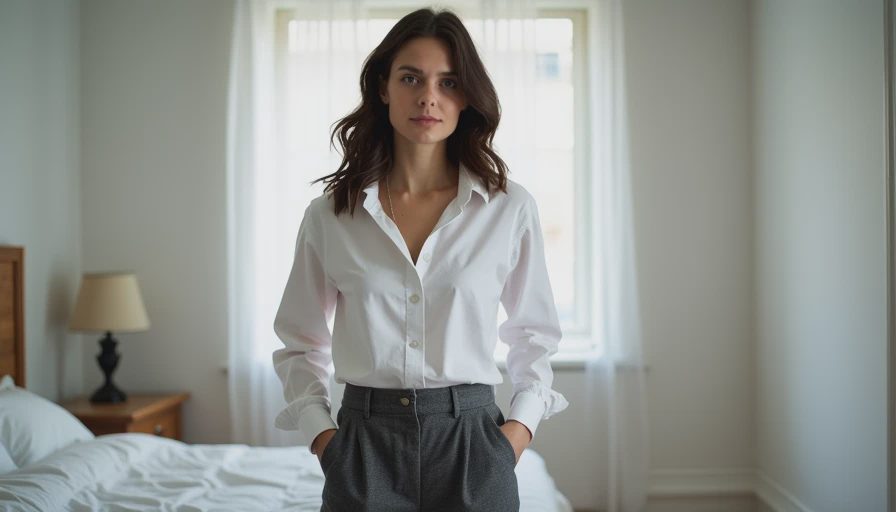
The Execution: Take your thrifted trousers—whether they are charcoal gray wool, vintage linen, or structured cotton chinos—and lay them flat on your ironing board. Align the inner and outer leg seams perfectly on top of each other. Using a high-heat steam iron and a damp pressing cloth to protect the fibers, press a sharp, crisp vertical crease right down the center-front and center-back axis of each trouser leg.
The Visual Impact: This sharp vertical line alters how light reflects off the fabric weave. It creates an instant geometric illusion of length and structure, making even a slightly oversized secondhand pair of pants look like they were custom-tailored specifically for your body architecture.
2. The Proportional Tuck (Defining the Waist Anchor)
Vintage garments, especially menswear items sourced from the high-yield thrift aisles, are often cut with extra fabric volume in the torso and sleeves. If you let an oversized vintage button-down or heavy knit sweater hang loosely over your hips, the outfit loses its structural boundary and looks sloppy.
The Execution: Instead of a messy, loose fit, utilize the "Full Tailor Tuck" or a precise "French Tuck." Pull your high-rise denim jeans or pleated trousers up to your natural waistline, tuck the entire hem of your shirt smoothly into the waistband, and then gently raise your arms to let just half an inch of fabric billow out naturally.
The Visual Impact: This creates a clean, deliberate proportional shift. It establishes your waist as a solid, structural anchor point, allowing the extra volume of a vintage silk blouse or cotton Oxford shirt to look fashionably relaxed and intentional rather than poorly fitted.
3. The Third-Layer Frame (Grounding Casual Basics)
An outfit consisting entirely of a basic thrifted t-shirt and jeans can easily look like you threw on whatever was lying on the floor. To make a simple base look like a highly curated fashion choice, you must introduce a structured "third layer."
The Execution: Never leave the house in just a top and a bottom. Always layer a highly structured, rigid outer piece over your casual base—such as a perfectly audited vintage wool blazer or a heavy canvas utility jacket. For an even more intentional, editorial look during an office shift, try the shoulder-drape technique: place the blazer over your shoulders like a cape without putting your arms through the sleeves.
The Visual Impact: The rigid, geometric shoulder lines of a well-constructed vintage blazer act as a clean visual frame for the casual base underneath. It instantly tones down the relaxed nature of denim and knits, projecting an aura of effortless authority and styling confidence.
Structural Execution Reference Guide
To help you remember how to apply these quick fixes when rushing through your morning workspace routine, use this quick practical matrix:
Fabric Treatment and Styling Breakdown
Secondhand Garment Base | Common Unintentional Flaw | The Quick Styling Correction | The Resulting Visual Impression |
Oversized Menswear Shirt | Droopy shoulders, billowing fabric around the hips and waist. | Execute a crisp sleeve roll up to the forearms, and tightly full-tuck into high-rise pants. | A relaxed, modern, and chic boyfriend-style corporate silhouette. |
Vintage Wool Trousers | Limp, saggy fabric lines that pool heavily around the ankles. | Steam-press a razor-sharp front crease line, and hem the cuffs cleanly at the ankle bone. | Elite, high-end tailoring quality that mimics expensive boutique designer wear. |
Basic Fine-Knit Cardigan | Looks limp and can easily resemble casual lounge sleepwear. | Button the top two buttons only, drape over a structured mock-neck, and add a heavy leather belt. | A beautifully textured, intentional, and cozy monochromatic column. |
Rigid Thrifted Denim Jeans | Can look overly casual or stiff when paired with standard t-shirts. | Add a structured third layer like a tweed houndstooth blazer, and clean the leather patch. | The ultimate hybrid Friday uniform: effortlessly polished yet perfectly comfortable. |
Consistency Is the Ultimate Luxury
Making your wardrobe look expensive doesn't require a premium luxury bank account; it requires a commitment to the details. When you take the time to press a clean crease into your trousers, balance your body's visual proportions with an intentional tuck, and frame your outfits with a sharp outer layer, you are changing the entire narrative of secondhand fashion.
You are proving that sustainability isn’t a sacrifice of personal elegance. You are showing that a receptionist on a budget can look just as sharp, curated, and confident as anyone else in the room. Stop looking at your thrifted clothes as cheap alternatives, treat them like investment-grade pieces, and let the discipline of intentional styling transform your everyday routine into a statement of absolute pride.





No comments yet — grab the first one.